
Visiting Earthquake Lake in Montana – 8 Things You Need to Know
Just west of Yellowstone National Park, in Montana, lies a remarkable testament to nature’s power: Earthquake Lake – also known simply as “Quake Lake.” In 1959, the magnitude 7.5 Hebgen Earthquake of August 17, 1959 created a landslide that dammed the Madison River and buried a campsite. This tragic event killed 28 people and created what we now know as Earthquake Lake.
This area isn’t as well-known to Yellowstone National Park visitors so if you’re looking for a quick way to get out of the crowds in the park, you might want to consider a quick drive out to Earthquake Lake.
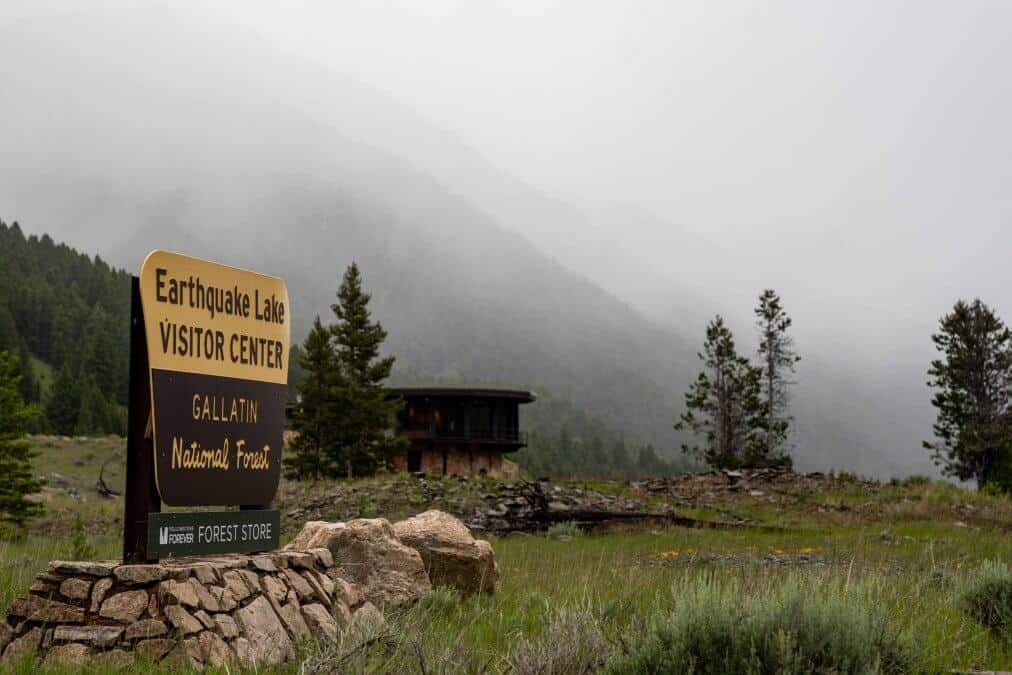
1. The name is very ‘on-the-nose’; Earthquake Lake was formed from an earthquake
In the nighttime hours of August 17, 1959, a powerful earthquake with a magnitude of 7.5 struck this region of Montana. The quake resulted in 28 deaths and this massive tremor caused a huge landslide, blocking the flow of the Madison River and created what is now known as Earthquake Lake. The event was incredibly chilling and tragic, submerging an entire campground under the waters of the newly formed lake. Though it caused significant changes to the landscape — and you can still see the slide wall area — today it serves as a fascinating site for learning and reflection.

2. Earthquake Lake is only a 30 minute drive from West Yellowstone
Earthquake Lake is easily accessible by car. It’s located about 26 miles northwest of West Yellowstone, Montana, on US Highway 287. The drive itself offers beautiful views of the mountains and forests, making the drive out to the lake part of the fun.

3. The Earthquake Lake Visitor Center is a must-see
The visitor center at Earthquake Lake is run by the US Forest Service and is open from mid-May to mid-September from 9am – 5pm. You’re going to find everything you want to know about the tragic events that took place that August evening, including a powerful but short movie called “A Force of Nature” about the event. It really hits home that this could happen anywhere, at any time! How terrifying!
I usually don’t watch movies in visitor centers because I have the attention span of a gnat, but this one was really good!
You can get your National Parks Passport stamped here and you’ll find a small, but decent, gift shop.
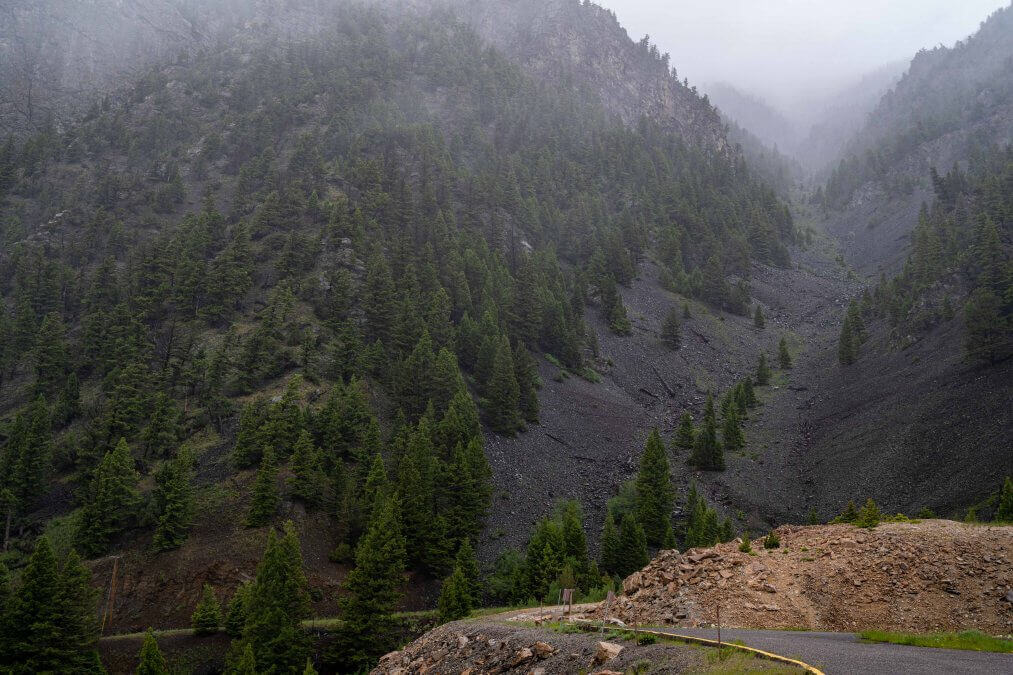
4. You can still see the landslide are right from the visitor center
To this day, when you park at the visitor center, look across the highway, to your right and you’ll be able to see the slide area where the mountain collapsed. The photo below isn’t the best photo as it was taken during a really foggy, rainy day, but you get the idea.
5. The fishing is great!
Earthquake Lake is stocked with trout and is locally well-known as a popular fishing spot. You can take guided fishing trips out on the lake or you can put in your own boat and drop in a line, provided you have the right permits.
6. A Memorial Boulder pays respect to those lost in the earthquake
From the visitor center parking lot, you can see a giant rock not too far off in the distance. There’s a paved trail that climbs up to the memorial boulder that bears the names of those who lost their lives. Even though there were likely hundreds of people in the area that night, only 28 people died. Of those 28 people, 19 were unfortunately buried in the landslide — their bodies were never found. Two died when a large rock fell and crushed the tent in which they were sleeping, and the rest died due to injuries from the earthquake.
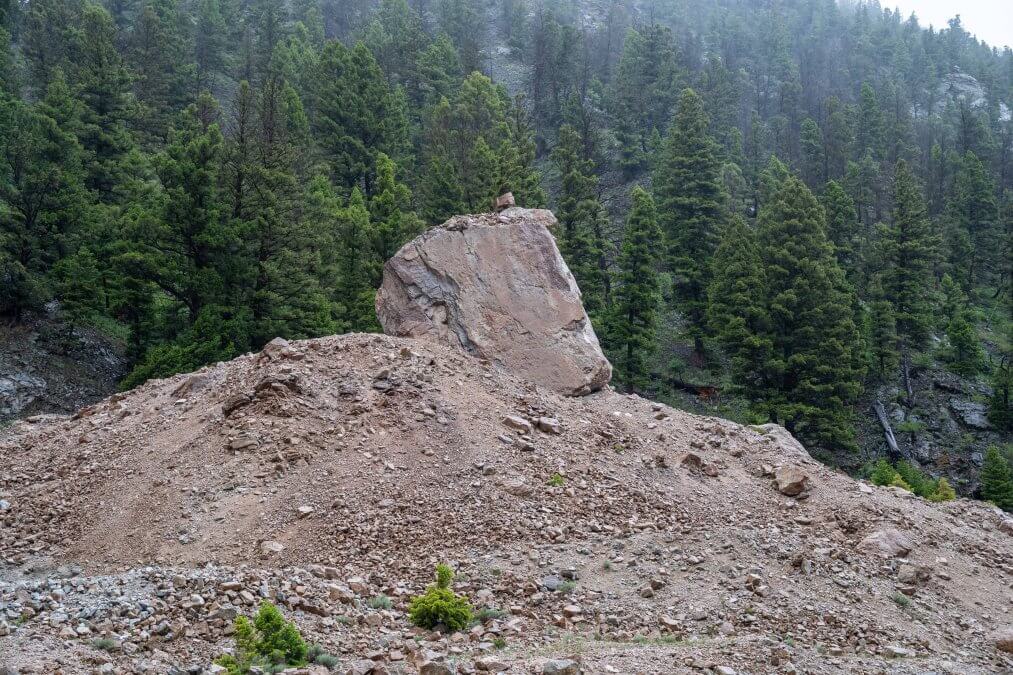
7. The Drive Around Earthquake Lake is beautiful
This area is absolutely stunning, to put it mildly. As you drive, you’ll find some pull-outs along the way that will give you more information on what happened in this area on the night of terror. You’ll also spot some “ghost forests” – white stumps of trees that were killed in water when the lake was formed. Yes, they’re still there to this day.
This map from the US Forest Service provides a great self-guided tour to all the points of interest in the area.

8. You can hike to Refugee Point
This is a 2.5 mile hike that takes you up to the spot where earthquake survivors gathered after the quake. I haven’t done this yet myself but I bet there are stunning views on this hike.
9. The best time to visit Earthquake Lake is in the summer
All of the roads and trails will be accessible and the visitor center will be open. It’s absolutely beautiful here in the summer! You can visit in the winter, but the visitor center is closed.

Earthquake Lake – Final Thoughts
I’ve visited Earthquake Lake three times and always find something new to learn. It’s a hauntingly beautiful area, and almost a bit depressing knowing the story behind what happened here. The visitor center is extremely well-done as the interpretive signs along the road that explain where everything happened.
If you’re planning a trip to Yellowstone, definitely consider taking part of the day to explore Earthquake Lake — especially if you’re staying in West Yellowstone as it’s not that far. It’s a reminder of the earth’s power and a chance to see how beauty can power through from destruction.


Thanks for sharing about Earthquake Lake. Finding spots close to Yellowstone but away from the crowds helps us plan our next Jackson Hole area trip.
I hadn’t heard of this before! I LOVE Montana so I’ll need to add this to my to-do list next time I’m out there.
I haven’t heard of this place! I LOVE Montana so I’ll have to check it out next time out there.
oOoOo – eerie! I didn’t know about this spot but appreciate the history you’ve shared. I also love all the movies at the visitor centers and watch every single one 😅If you stayed to watch this one it must be excellent!